Why Women's Heart Health Deserves Its Own Focus
Heart disease in women often presents differently than the “classic” symptoms typically described for men — think extreme fatigue, breathlessness, or nausea rather than dramatic chest pain. Because of this, symptoms in women are sometimes dismissed or misattributed, delaying diagnosis and treatment.
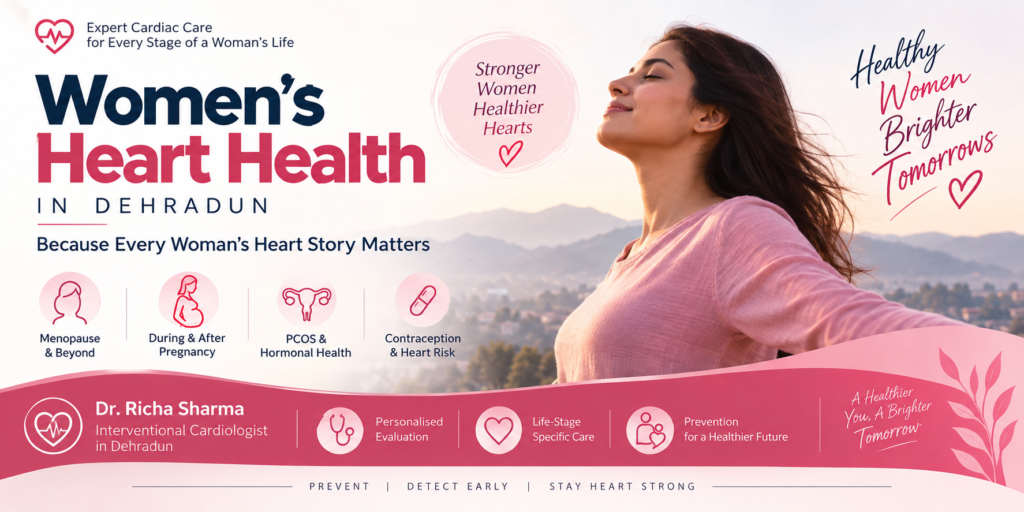
Dr. Richa Sharma, one of the few female interventional cardiologists in the region, brings particular attention to this gap in her practice.
Life Stages That Affect Heart Risk in Women
After menopause, when cardiovascular risk tends to rise
During and after pregnancy, particularly for women with pre-existing conditions
Women with PCOS, which carries its own cardiovascular risk profile
Women on hormonal contraception with additional risk factors
What This Focus Looks Like in Practice
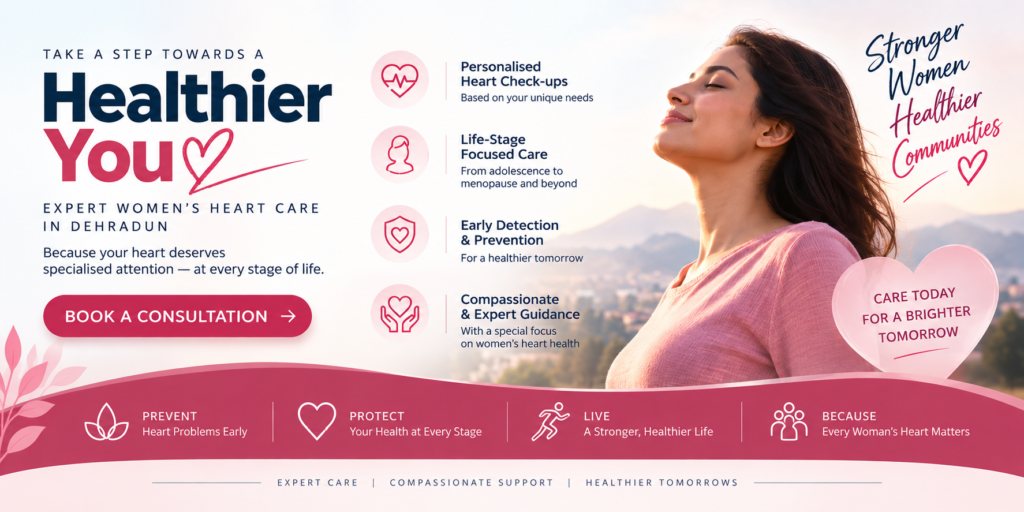
Consultations take into account symptoms, family history, and life-stage-specific risk factors, with appropriate testing — from a basic heart check-up to more targeted tests like echocardiography — recommended based on individual need.
FAQs
Are women really at lower risk of heart disease than men?
Not necessarily — risk tends to rise notably after menopause, and certain conditions like PCOS add risk earlier in life. It’s a common misconception that heart disease is “mainly a men’s problem.”
What symptoms should women specifically watch for?
Extreme fatigue, breathlessness, jaw or back discomfort, and nausea are worth paying attention to, especially if they’re new or unusual for you.
Should I get checked even without symptoms?
If you have risk factors like family history, PCOS, or are past menopause, a preventive check-up is a reasonable step even without symptoms.