Silent Heart Attack / Silent Ischemia — Symptoms You Might Miss

What Is a Silent Heart Attack?

A silent heart attack, medically known as silent ischemia, happens when the heart’s blood supply is reduced or blocked without the classic, dramatic chest pain most people associate with a heart attack. It’s more common than many realise, and it’s often only discovered later — during an unrelated ECG or echocardiography.

Who Is More Likely to Experience This

People with diabetes, where nerve changes can blunt typical pain signals
Older adults
Women, whose symptoms often differ from the “classic” presentation — see our women’s heart health page

Subtle Signs Worth Noticing

Unexplained fatigue that doesn’t match your activity level
Mild breathlessness during routine tasks
General discomfort mistaken for indigestion or muscle strain
A vague sense that “something feels off,” without a clear reason

Why Screening Matters Here

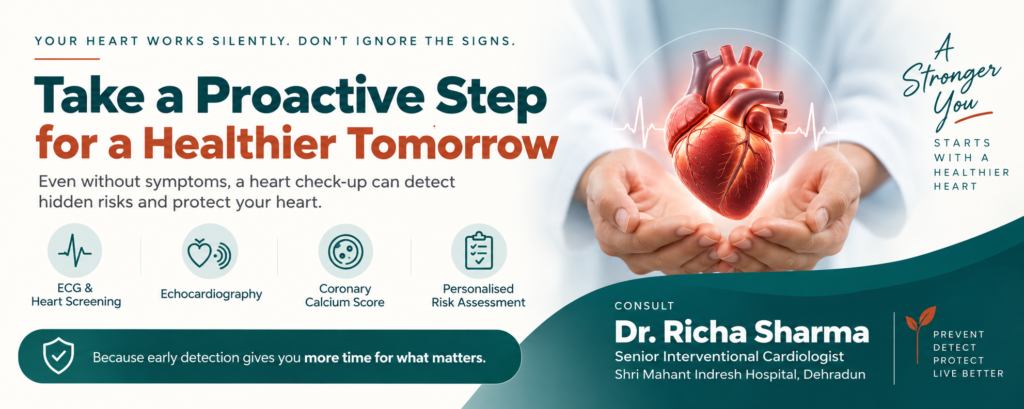
Because silent ischemia doesn’t announce itself, it’s one of the strongest arguments for routine preventive heart check-ups rather than waiting for symptoms — especially for anyone with risk factors like high cholesterol or hypertension.

FAQs

Can a silent heart attack still cause lasting damage?
Yes — the heart muscle can be affected even without obvious symptoms at the time, which is why early detection through screening matters.

How is a silent heart attack usually discovered?
Often incidentally, through an ECG, echocardiography, or a coronary calcium score done during a routine check-up.

Should I get screened even if I feel completely fine?
If you have risk factors like diabetes, high cholesterol, or a family history of heart disease, a preventive check-up is a reasonable step regardless of how you currently feel.

Appointment
×

Appointment Form