What Changes After a Stent — And What Doesn't
Getting a stent placed during angioplasty is often just the beginning of a longer relationship with your heart health, not the end of the story. Many patients return to normal daily life fairly quickly, but a few things do need ongoing attention.
What Recovery Typically Involves
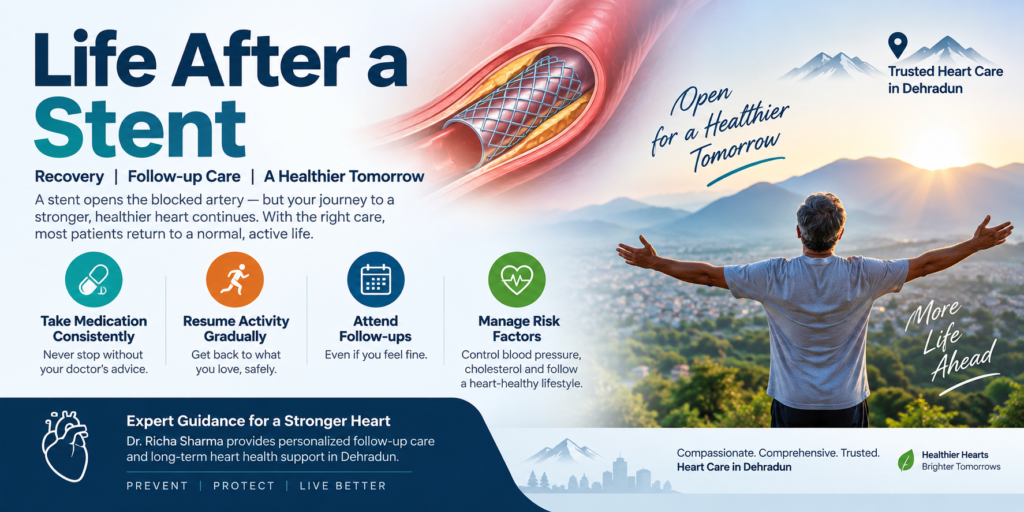
Continuing prescribed medication consistently — stopping on your own, even because you feel fine, is a common and risky mistake
Gradually resuming physical activity, guided by your doctor’s advice
Attending follow-up appointments, even without symptoms
Managing related risk factors like cholesterol and blood pressure, since the stent addresses one blockage — not the underlying risk factors that caused it
Watching for Warning Signs
Patients are advised to stay alert to any return of chest discomfort, unusual breathlessness, or fatigue, and to report these promptly rather than assuming they’re unrelated.
FAQs
How soon can I return to normal activity after a stent?
This varies by individual and is best guided by your doctor based on your specific recovery and overall health.
Do I need to take medication forever after a stent?
Many patients do need long-term medication, though the specifics depend on your case. This should never be stopped without discussing it with your doctor first.
Can the artery block again after a stent?
It’s possible, which is why ongoing risk factor management and follow-up remain important even after a successful procedure.
—