Holter Monitor for Palpitations in Dehradun

Understanding the Holter Monitor Test

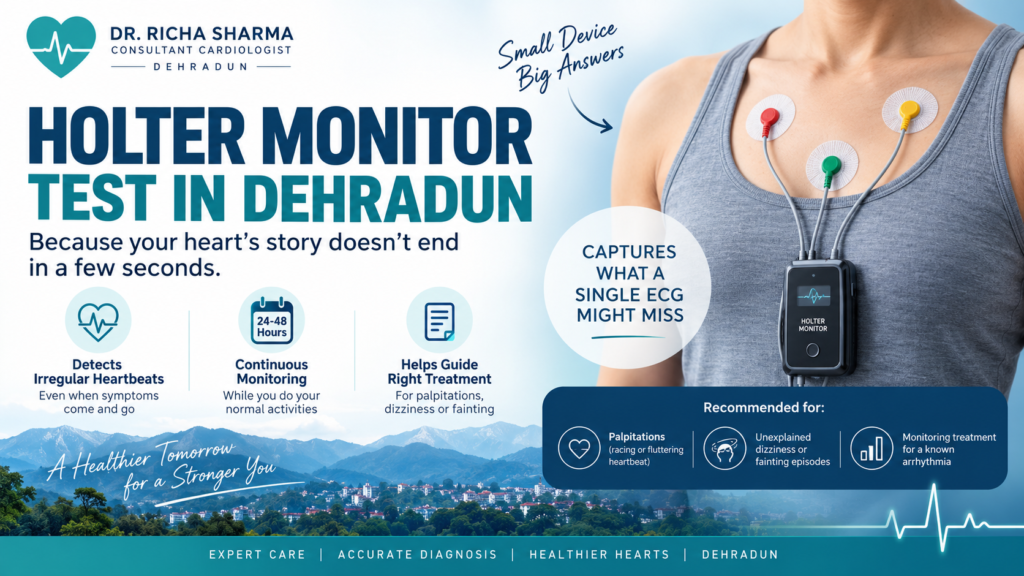
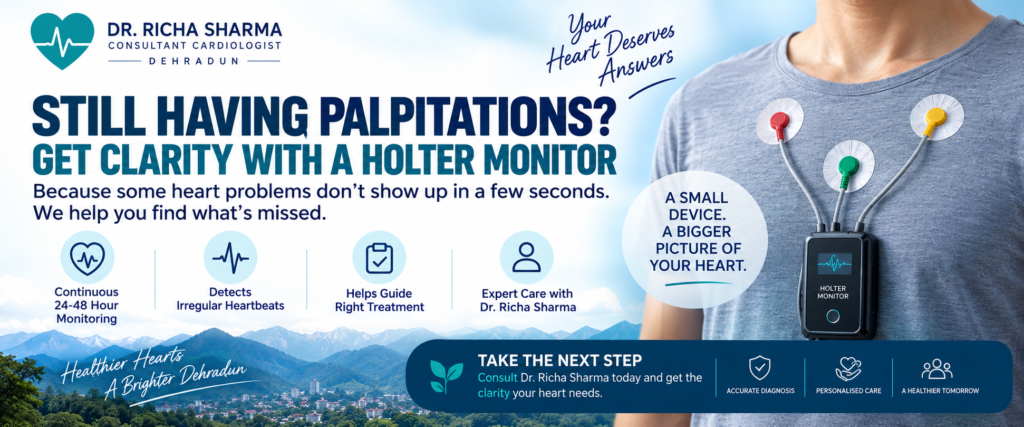
A Holter monitor is a small, portable device that records your heart’s rhythm continuously over 24-48 hours, worn during your normal daily activities. It’s particularly useful because irregular heartbeats, or arrhythmias, don’t always show up during a brief, in-clinic ECG — they can come and go.
Dr. Richa Sharma recommends Holter monitoring for patients whose symptoms are real but hard to “catch” during a standard visit.

When Is It Recommended?

Palpitations — a racing, fluttering, or irregular heartbeat sensation
Unexplained dizziness or fainting episodes
Following treatment for a diagnosed arrhythmia, to monitor effectiveness

How the Test Works

The device is attached with small electrodes and worn under your clothing, so it doesn’t interfere with daily activities. You’ll usually be asked to keep a brief diary of any symptoms during the monitoring period, which helps correlate what you feel with what the device records.

FAQs

Is a Holter monitor uncomfortable to wear?

Most patients adjust to it quickly. It’s lightweight and designed to be worn discreetly under clothing.

What happens after the test?

The recording is analysed, and Dr. Sharma will discuss the findings with you, along with next steps if any rhythm abnormality is identified.

How is this different from an ECG done in the clinic?

A standard ECG captures a few seconds of heart activity — a Holter captures a much longer window, which is essential for catching irregular patterns that come and go.
Appointment
×

Appointment Form