High Blood Pressure Treatment in Dehradun
High blood pressure is probably the most common condition mentioned on this entire website – it comes up as a cause or risk factor on nearly every other page, from heart blockages to heart failure to valve disease. That’s not a coincidence. It’s genuinely one of the biggest drivers of heart disease overall, and also one of the most manageable, provided it’s actually diagnosed and treated consistently rather than ignored because it “doesn’t feel like anything.” This page explains what hypertension is, why it matters so much for the heart specifically, and what long-term management actually looks like.
Dr. Richa Sharma is an Interventional Cardiologist practicing in Dehradun, managing hypertension both as a standalone condition and as part of the broader picture for patients with existing heart disease.
What Is Hypertension?
Blood pressure is the force of blood pushing against the walls of your arteries as the heart pumps. It’s recorded as two numbers – systolic (the pressure when the heart beats) over diastolic (the pressure when the heart rests between beats). Hypertension, or high blood pressure, is when this pressure stays consistently elevated above normal, forcing the heart and blood vessels to work harder than they should, over a long period of time.
A single high reading doesn’t necessarily mean you have hypertension – blood pressure naturally fluctuates through the day with stress, activity, and even the anxiety of being at a doctor’s clinic. A diagnosis is generally based on multiple readings taken on different occasions, sometimes supported by home monitoring or a 24-hour ambulatory blood pressure test, to confirm the pattern is consistent rather than a one-off spike.
Why High Blood Pressure Matters for the Heart
This is worth explaining plainly, because it’s the reason hypertension shows up so often across other pages on this site. Persistently high pressure forces the heart’s main pumping chamber to work harder, which over years causes it to thicken and eventually weaken – a direct pathway toward heart failure. It also damages the inner lining of the arteries, accelerating the same plaque buildup process that leads to heart blockages and heart attacks. It contributes to structural strain that can affect heart valves and rhythm, and it’s a major, well-established risk factor for stroke and kidney disease as well. In short, uncontrolled hypertension doesn’t just raise a number – it quietly damages several different parts of the cardiovascular system at once, which is exactly why it’s treated as seriously as it is.
Symptoms of High Blood Pressure
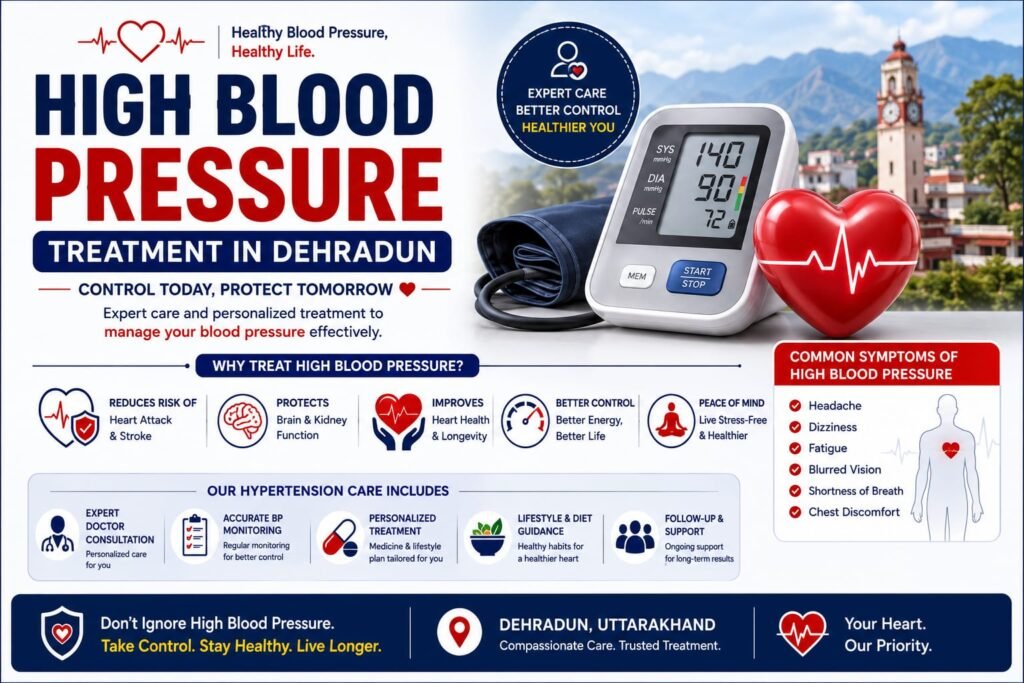
The honest answer is that most people with high blood pressure have no symptoms at all – this is why it’s often called a “silent” condition, and why routine checking matters more than waiting to feel unwell. When symptoms do occur, they’re usually a sign that blood pressure has been very high for some time, or has spiked suddenly, and can include:
Headaches, particularly at the back of the head, especially in the morning.
Dizziness or lightheadedness.
Blurred vision.
Breathlessness, particularly with exertion.
Chest discomfort, in more severe or long-standing cases.
Nosebleeds, occasionally, with very high readings.
Because symptoms are so unreliable as a warning sign, blood pressure should be checked periodically regardless of how you feel, not just when something seems off.

What Causes High Blood Pressure?
Family history – a strong genetic component exists; hypertension is more likely if a parent or sibling has it.
Age – blood pressure tends to rise naturally with age as arteries become stiffer.
Excess salt intake, which is a particularly significant factor in the Indian diet given how much salt is used in everyday cooking and processed foods.
Obesity and lack of physical activity.
Chronic stress, which can contribute to sustained elevation over time.
Excess alcohol consumption.
Diabetes and high cholesterol, which frequently occur alongside hypertension and compound cardiovascular risk together.
Kidney disease, thyroid disorders, and certain other medical conditions, which can be underlying causes rather than just contributing factors – this is why some patients need testing to rule out a specific medical cause, particularly if blood pressure is very high or difficult to control.
Certain medications, including some pain relievers, decongestants, and hormonal treatments, which can raise blood pressure as a side effect.
For most people, hypertension develops from a combination of genetics and lifestyle factors over years, rather than from any single identifiable cause.
How Is Hypertension Diagnosed?
Multiple blood pressure readings, taken on different occasions, to confirm a consistent pattern rather than a single elevated reading.
Home blood pressure monitoring, often recommended to get a more accurate picture of readings outside the clinic setting.
24-hour ambulatory blood pressure monitoring, in select cases, which records blood pressure automatically throughout a full day and night, including during sleep.
Basic blood and urine tests, to check kidney function, blood sugar, and cholesterol, since these are closely linked to hypertension and its management.
ECG and echocardiogram, to check whether high blood pressure has already begun to affect the heart’s structure or function.
Additional tests, in specific cases, to rule out an underlying medical cause if blood pressure is unusually high or difficult to control with standard treatment.
Treatment and Long-Term Management
Lifestyle changes
These form the foundation of treatment for nearly everyone, regardless of whether medication is also needed. This includes reducing salt intake meaningfully (not just skipping the salt shaker, but being mindful of pickles, papads, and processed foods common in everyday diets), regular physical activity, maintaining a healthy weight, limiting alcohol, managing stress, and quitting smoking.
Medication
Several classes of blood pressure medication are available, and the right choice depends on individual factors including age, other existing conditions like diabetes or kidney disease, and how the body responds to treatment. It’s common to need more than one medication working together to achieve good control, and doses or combinations are often adjusted over time based on response – this isn’t a sign that something is wrong, it’s a normal part of finding what works best for each individual.
Regular monitoring
Since hypertension is a long-term condition, ongoing monitoring – whether at home, during clinic visits, or both – is what allows treatment to be adjusted appropriately over time, rather than left unchanged for years regardless of how well it’s actually being controlled.
Managing related conditions together
Because high blood pressure so often occurs alongside diabetes and high cholesterol, effective management usually means addressing all of these together rather than treating each one in isolation, since they compound each other’s impact on the heart and blood vessels.
What Happens If High Blood Pressure Goes Untreated
Left uncontrolled over years, hypertension steadily increases the risk of heart attack, stroke, heart failure, and kidney disease – this is well established and is the core reason treatment is recommended even when someone feels completely fine. Someone with longstanding, poorly controlled high blood pressure may need further evaluation for coronary artery disease if other symptoms or risk factors are also present, since the arterial damage from hypertension and the plaque buildup process are closely connected. This isn’t meant to be alarming for its own sake – it’s simply the medical reality that makes consistent management worth taking seriously, even though the condition itself often causes no day-to-day symptoms.
Frequently Asked Questions
What is considered high blood pressure?
Blood pressure is generally considered high when readings are consistently at or above 140/90 mmHg, though your cardiologist may use a lower threshold depending on your overall risk profile and existing health conditions. Diagnosis is based on multiple readings, not a single measurement.
Does high blood pressure have symptoms?
Usually not – it’s often called a “silent” condition because most people feel completely normal despite having elevated readings. This is exactly why routine checking is important, rather than waiting to feel unwell.
What causes high blood pressure?
A combination of factors, including family history, age, excess salt intake, obesity, lack of physical activity, chronic stress, and sometimes underlying conditions like kidney or thyroid disease.
Can high blood pressure be controlled without medication?
In some cases, particularly mild or early hypertension, lifestyle changes alone – reduced salt intake, regular exercise, weight management, and stress reduction – can bring blood pressure into a normal range. Many others need medication alongside these changes for effective control.
Is high blood pressure dangerous if I feel fine?
Yes – the danger of hypertension lies precisely in the fact that it causes no symptoms while quietly damaging the heart, arteries, kidneys, and brain over years. Feeling fine doesn’t mean it isn’t affecting your body.
How often should blood pressure be checked?
For most adults, at least once a year is reasonable if previous readings have been normal. Anyone diagnosed with hypertension, or with risk factors like diabetes or a family history, should check more frequently, often as advised by their doctor based on how well their blood pressure is controlled.
What foods should I avoid with high blood pressure?
Reducing salt is the single most important dietary change, which in Indian cooking often means being mindful of pickles, papads, salted snacks, and processed foods, not just table salt. A generally balanced diet lower in saturated fat also supports overall cardiovascular health.
Can high blood pressure be cured completely?
For most people, hypertension is a long-term condition that’s managed rather than cured, similar to diabetes. Good control through lifestyle and, where needed, medication significantly reduces its risks, even though it typically requires ongoing management rather than a one-time fix.
What is the link between high blood pressure and heart disease?
Sustained high pressure damages artery walls, accelerates plaque buildup, and forces the heart to work harder over time, contributing directly to heart blockages, heart failure, and irregular heart rhythms. It’s one of the most significant modifiable risk factors for heart disease overall.
Can I stop my blood pressure medication once my readings improve?
This should never be decided without your doctor. Improved readings are usually a sign the treatment is working, not that the underlying condition has resolved – stopping medication abruptly often causes blood pressure to rise again, sometimes sharply.
Does stress cause high blood pressure?
Chronic stress can contribute to sustained blood pressure elevation and can also worsen control in someone already diagnosed with hypertension, making stress management a genuinely useful part of overall treatment, alongside medication and lifestyle changes.
When should I see a cardiologist for high blood pressure?
If your blood pressure is consistently elevated, difficult to control despite treatment, or if you have other risk factors or symptoms like breathlessness or chest discomfort alongside it, it’s worth a dedicated cardiac evaluation rather than managing it in isolation.
Closing Section (soft CTA - NMC-compliant, no promotional claims)
Whether you’ve just been diagnosed with high blood pressure, are struggling to keep it under control, or want a proper cardiac evaluation because of a family history, Dr. Richa Sharma consults with patients in Dehradun on hypertension management, both on its own and alongside its connection to broader heart health.