Heart Blockage Treatment in Dehradun
“Heart blockage” is one of those terms people use long before they understand it — often because a parent, spouse, or colleague was just told they have one. This page is meant to explain what a heart blockage actually is, why it happens, how doctors find it, and what the real treatment options are, from lifestyle changes to medication to procedures like angioplasty or bypass surgery.Dr. Richa Sharma is an Interventional Cardiologist practicing in Dehradun, treating coronary artery disease across its full range — from early-stage risk management to advanced blockages requiring intervention.raph here
What Is a Heart Blockage?
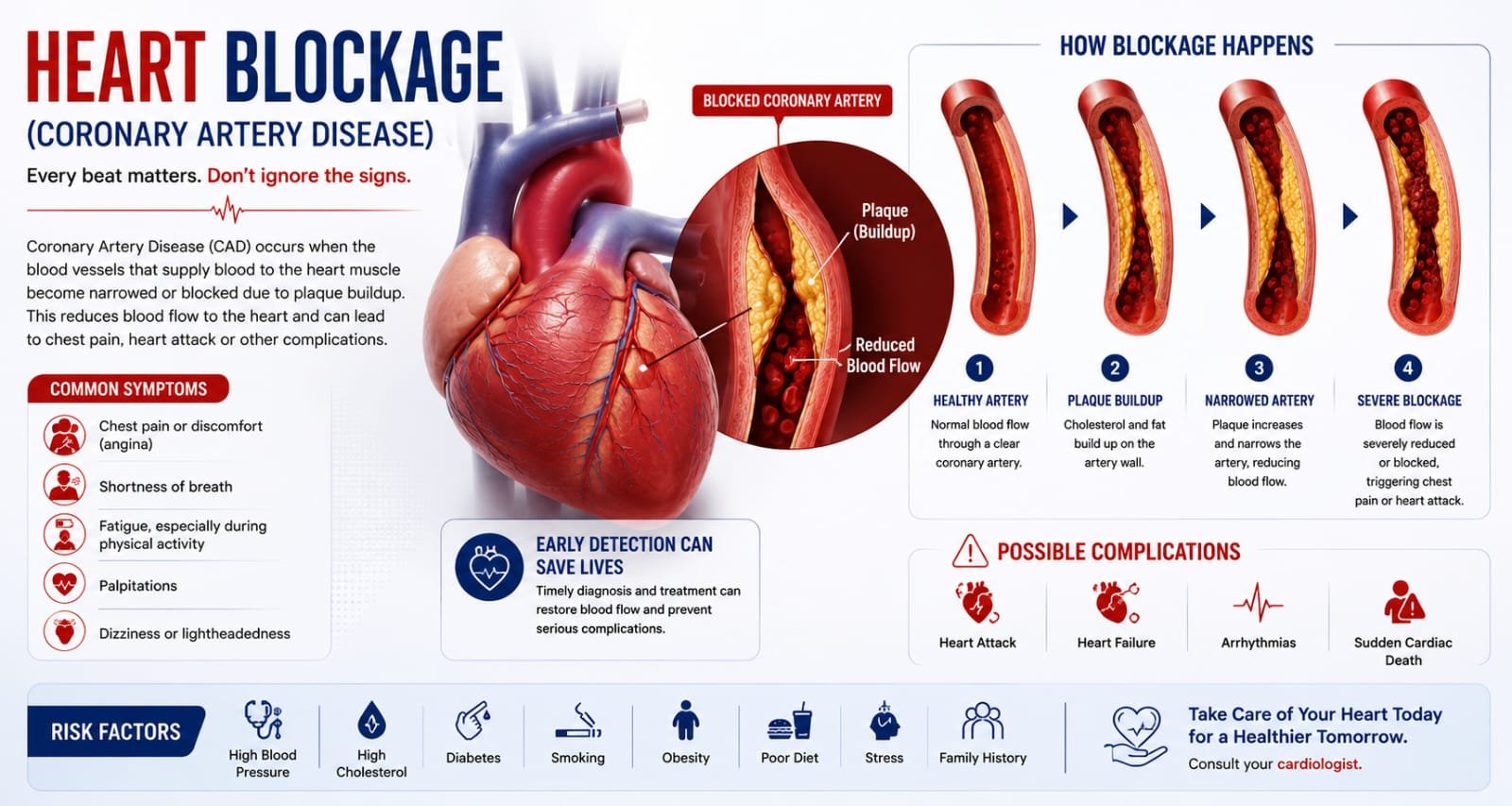
A “heart blockage” refers to a narrowing in one of the coronary arteries — the blood vessels that supply oxygen-rich blood to the heart muscle itself. This narrowing happens gradually, over years, through a process called atherosclerosis, in which fatty deposits, cholesterol, and other substances build up along the inner wall of the artery, forming plaque.As plaque builds up, the artery narrows and less blood reaches the heart muscle, especially during physical exertion when the heart needs more oxygen. If a plaque ruptures and a blood clot forms suddenly on top of it, the artery can become completely blocked — this is what causes a heart attack.The medical term for this condition is coronary artery disease (CAD), and it’s the underlying cause behind angina, most heart attacks, and a large share of heart failure cases over time.
What Causes Heart Blockages?
“Heart blockage” is one of those terms people use long before they understand it — often because a parent, spouse, or colleague was just told they have one. This page is meant to explain what a heart blockage actually is, why it happens, how doctors find it, and what the real treatment options are, from lifestyle changes to medication to procedures like angioplasty or bypass surgery.Dr. Richa Sharma is an Interventional Cardiologist practicing in Dehradun, treating coronary artery disease across its full range — from early-stage risk management to advanced blockages requiring intervention.raph here
Heart Blockage Treatment in Dehradun
Coronary artery disease develops from a combination of factors, some that can be managed and some that can’t:
Diabetes — high blood sugar damages blood vessel walls over time, accelerating plaque buildup.
High cholesterol, particularly high LDL (“bad” cholesterol), which is a major driver of plaque formation.
High blood pressure, which puts extra strain on artery walls.
Smoking and tobacco use, which damages the inner lining of blood vessels and speeds up narrowing.
Obesity and a sedentary lifestyle, which contribute to most of the above.
Family history, since a close relative with early heart disease increases individual risk regardless of lifestyle.
Age and gender, as risk naturally rises with age, and men tend to develop CAD earlier than women, though the gap narrows after menopause.
Chronic stress, which is increasingly recognized as a contributing factor, particularly alongside the other risks above.
Most patients have more than one of these factors together, which is why heart blockage is best understood as the result of cumulative, long-term strain on the arteries rather than a single cause.
Early Warning Signs and Symptoms
Coronary artery disease can be silent for years before it causes symptoms, which is part of why regular check-ups matter for anyone with risk factors, even without complaints. When symptoms do appear, they commonly include:
Chest discomfort or angina — often described as tightness, heaviness, or pressure rather than sharp pain, typically brought on by exertion and relieved by rest.
Breathlessness, especially on exertion or while climbing stairs, that’s new or worse than before.
Fatigue that’s disproportionate to activity.
Pain that spreads to the arm (usually the left), jaw, neck, back, or stomach.
Sweating, nausea, or lightheadedness accompanying chest discomfort.
Palpitations or an irregular heartbeat in some cases.
It’s worth being clear that symptoms can be atypical, particularly in women and in people with diabetes, who may experience vague fatigue or breathlessness without classic chest pain. Any of these symptoms, especially if new or worsening, is worth getting checked rather than waiting.

How Is a Heart Blockage Diagnosed?
Diagnosis usually builds up in stages, starting with the least invasive tests:
ECG (electrocardiogram) — records the heart’s electrical activity and can show signs of reduced blood flow or a past heart attack.
Echocardiogram — an ultrasound of the heart that checks how well it’s pumping and looks for areas of weakened muscle.
TMT (treadmill test) or stress test — checks how the heart responds to exertion, which can reveal blockages that aren’t obvious at rest.
Blood tests — including cholesterol profile, blood sugar (HbA1c), and, if a heart attack is suspected, cardiac enzyme markers.
CT angiography — a non-invasive scan that can visualize the coronary arteries directly.
Coronary angiography — a catheter-based test that gives the most detailed, direct view of the arteries and is usually the final step to confirm the exact location and severity of a blockage before deciding on treatment.
Which combination of tests is needed depends on symptoms, risk factors, and findings at each stage — not every patient needs every test.
Treatment Options for Heart Blockage
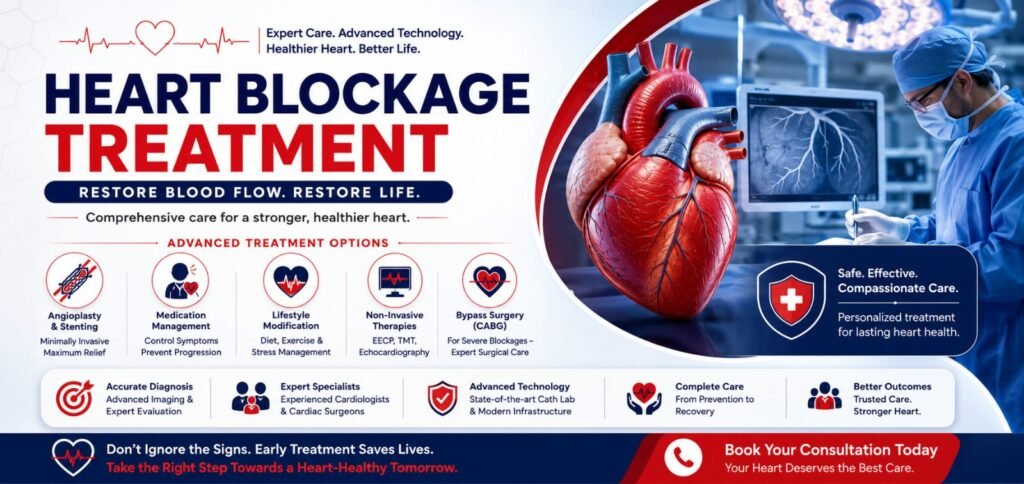
Treatment is not one-size-fits-all. It depends on how many arteries are affected, how severe the blockage is, and the patient’s overall heart function and health.
Lifestyle and risk factor management For early or mild disease, and as a foundation alongside any other treatment, this includes quitting smoking, managing diabetes and blood pressure, a heart-healthy diet, regular physical activity as advised, and weight management. This isn’t a lesser option — it’s the basis every other treatment builds on.
Medication Cholesterol-lowering drugs (statins), blood pressure medication, blood thinners, and anti-anginal medication are used to slow disease progression, reduce symptoms, and lower the risk of a heart attack. Many patients with mild to moderate blockages are managed well on medication alone, alongside lifestyle changes.
Angioplasty and stenting Used when a significant blockage is limiting blood flow despite medication, or during a heart attack when an artery needs to be opened urgently. A balloon widens the artery and a stent holds it open. (See our dedicated angioplasty page for full details.)
Bypass surgery (CABG) Considered when blockages are extensive, involve multiple arteries, or are in locations not well suited to stenting — a healthy blood vessel from elsewhere in the body is used to reroute blood flow around the blockage.
The choice between medication, angioplasty, and bypass surgery is made based on individual angiogram findings and is often a shared decision between the cardiologist, the patient, and in complex cases, a cardiac surgeon as well.
Can Heart Blockages Be Reversed or Reduced Naturally?
This is a common and reasonable question. Aggressive lifestyle changes and consistent medical management — particularly strict cholesterol and blood pressure control — can slow the progression of coronary artery disease and, in some documented cases, contribute to modest regression of plaque. However, this is gradual, requires sustained discipline over years, and isn’t a substitute for medically necessary procedures when a blockage is already severe or causing symptoms. Claims of quick or complete “reversal” of significant blockages through diet or supplements alone aren’t supported by strong medical evidence — this is a conversation worth having directly with your cardiologist rather than relying on general claims.
When Should You See a Cardiologist?
New or worsening chest discomfort, pressure, or tightness, especially with exertion.
Breathlessness that’s new or has gotten worse.
A strong family history of heart disease, particularly at a young age.
Diabetes, high blood pressure, or high cholesterol that hasn’t been evaluated from a heart-health perspective.
Any episode of chest pain accompanied by sweating, nausea, or pain radiating to the arm or jaw — this warrants urgent medical attention, not a wait-and-see approach.
Frequently Asked Questions
What is coronary artery disease / heart blockage?
It’s a narrowing of the arteries supplying the heart muscle, caused by a gradual buildup of fatty plaque inside the artery walls. It’s the underlying condition behind angina and most heart attacks.
What are the early warning signs and symptoms of a heart blockage?
Chest tightness or pressure on exertion, breathlessness, unusual fatigue, and pain spreading to the arm, jaw, or back are common signs, though the condition can also be silent for years before symptoms appear.
What causes heart blockages?
A combination of factors including diabetes, high cholesterol, high blood pressure, smoking, obesity, family history, and age. Most patients have more than one contributing factor.
How is a heart blockage diagnosed?
Through a combination of ECG, echocardiogram, stress testing (TMT), blood tests, and, when needed, CT or catheter-based coronary angiography to confirm the exact location and severity.
Can a heart blockage be treated without surgery or stents?
Yes, in many cases — mild to moderate blockages are often managed well with medication and lifestyle changes alone. Angioplasty or bypass surgery is reserved for blockages that are severe or not responding to medical management.
When is angioplasty vs bypass surgery recommended for blockages?
Angioplasty is generally used for fewer, more accessible blockages, while bypass surgery is considered for multiple, complex, or extensive blockages. The decision is based on angiogram findings and overall heart function.
Can heart blockages be reversed or reduced naturally?
Strict, sustained lifestyle and medical management can slow progression and, in some cases, modestly reduce plaque, but this is gradual and doesn’t replace medically necessary treatment for severe blockages.
What percentage of blockage needs a stent?
There’s no single fixed number — the decision considers the degree of narrowing (often significant blockages are those around 70% or more in a major artery), the artery’s location, symptoms, and additional tests like FFR, not the percentage alone.
What lifestyle and diet changes help manage coronary artery disease?
Quitting smoking, a diet low in saturated fat and salt, regular physical activity as advised by your doctor, weight management, and strict control of diabetes, blood pressure, and cholesterol are the main pillars.
Is chest pain always a sign of heart blockage?
No — chest pain has many possible causes, including muscular, digestive, or anxiety-related issues. However, any new or exertion-related chest discomfort should be evaluated rather than assumed to be harmless.
When should I see a cardiologist for chest pain or breathlessness?
If symptoms are new, worsening, occur with exertion, or are accompanied by sweating, nausea, or pain spreading to the arm or jaw, it’s worth getting evaluated promptly rather than waiting for symptoms to resolve on their own.
Can young adults get heart blockages?
Yes — while risk rises with age, coronary artery disease is increasingly seen in younger adults, particularly with diabetes, smoking, obesity, or a strong family history as contributing factors.
Closing Section (soft CTA — NMC-compliant, no promotional claims)
Whether you’re managing risk factors, dealing with new symptoms, or trying to understand a diagnosis someone in your family has just received, it helps to talk it through with a cardiologist directly. Dr. Richa Sharma consults with patients in Dehradun on coronary artery disease, from prevention and medication management through to angiography and angioplasty when needed.