Fainting: Harmless Moment or Warning Sign?
Fainting, medically called syncope, has many possible causes — from simple dehydration to standing up too quickly. But in some cases, it’s the heart signaling a problem, particularly when it involves an underlying arrhythmia or structural issue.
When Fainting Warrants a Cardiac Evaluation
Fainting during physical exertion, rather than after standing too long
Fainting accompanied by chest discomfort or palpitations beforehand
Fainting with no clear trigger, especially if it recurs
A family history of unexplained fainting or sudden cardiac events
How This Is Investigated
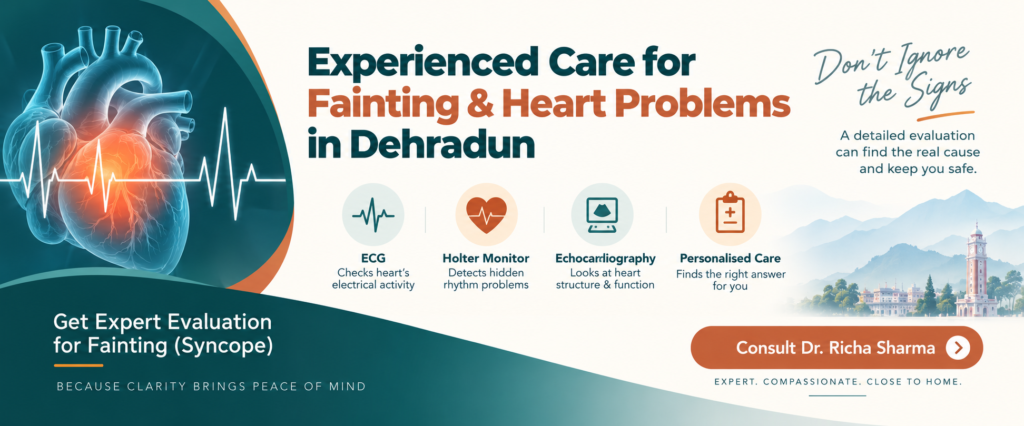
Evaluation typically starts with a detailed history and ECG, and may extend to a Holter monitor to catch rhythm abnormalities, or echocardiography to assess the heart’s structure.
FAQs
Is fainting always related to the heart?
No — many cases are due to non-cardiac causes like dehydration or a sudden drop in blood pressure upon standing. A doctor can help determine which category your episode falls into.
Should I be worried after just one fainting episode?
A single episode with a clear, benign trigger (like standing up too fast) is usually less concerning than fainting during exertion or with no clear cause — the latter deserves evaluation.
What tests are typically done after a fainting episode?
This varies, but commonly includes an ECG, blood pressure assessment, and sometimes extended heart rhythm monitoring.